Why Acoustic Privacy Drives Productivity in Open Workplaces
Open-plan offices promised spontaneous collaboration, yet the reality for many teams is a steady hum of distractions. Conversations, notifications, and HVAC noise hover between 50–60 dBA, well above the comfort range for deep work. The human brain is especially sensitive to intelligible speech; even when not directly involved, nearby dialogue competes for attention and erodes working memory. That is why acoustic privacy—not just quiet—is now a top driver of employee satisfaction and performance.
A soundproof office solution interrupts noise at the source by creating a precise acoustic boundary around the user. High-quality pods combine mass, damping, and airtight sealing to block airborne sound while controlling reverberation inside. Look for performance indicators such as STC (Sound Transmission Class) in the high 30s to low 40s for speech privacy and interior NRC (Noise Reduction Coefficient) values that absorb reflections. Together, these characteristics can reduce perceived speech from the outside by 25–35 dB and keep interior reverberation under the 0.5-second threshold typically recommended for intelligibility. The result: fewer context switches, quicker task completion, and a calmer floorplate overall.
Beyond measurable output, acoustic refuge supports well-being. Constant interruption elevates cognitive load and stress markers; chronic exposure can elevate fatigue and lower job satisfaction. A well-engineered soundproof environment offers control—over light, sound, and even air quality—making room for neurodivergent colleagues and anyone who thrives in low-stimulus settings. When private space is always available within a few steps, conversations about benefits, health, and performance can be handled with dignity. Teams get a predictable, respectful zone for video calls and hybrid standups, without hijacking conference rooms meant for larger groups.
Hybrid work amplifies these benefits. Foot traffic spikes when in-office days overlap, and spontaneous calls with remote teammates can disrupt lines of desks. Pods create agile “instant rooms” without the cost or rigidity of fixed construction. They slot into renovation projects, swing spaces, and leased floors where permanent walls aren’t feasible. Well-placed units dampen corridor chatter and offer “escape hatches” next to busy collaboration areas, balancing buzz with focus—so the workday can flex without becoming chaotic.
The Design Anatomy of a Premium Office Pod
Effective acoustic performance begins with the shell. Multi-layer wall modules marry dense cores with viscoelastic damping to convert sound energy into heat, while precision seals shut down the tiny airgaps that leak speech frequencies. Laminated safety glass—often 8–10 mm with PVB or SGP interlayers—blocks sound better than monolithic panes and resists flex that can transmit vibration. Door hardware with perimeter gaskets, magnetic latches, and auto-leveling thresholds prevents sound “flanking” at the edges. Floor systems often decouple via rubber feet or isolators to reduce structure-borne noise, all while keeping the pod stable and re-locatable.
Inside, the details matter as much as mass. High NRC linings such as PET felt or melamine foam absorb reflections so voices don’t bounce; asymmetrical paneling and subtle diffusers tame flutter echo for natural, fatigue-free audio. Ventilation is quiet by design, with fans tuned below 35 dBA and airflow routed through baffled paths that preserve isolation. Good pods manage CO2 buildup with steady air exchange, keeping levels comfortable during longer calls. Dimmable LED lighting (CRI 90+), low glare optics, and optional warmer color temperatures protect eyes over extended sessions. The Cepheus soundproof office pod pairs laminated glass with high-density acoustic foams and engineered seals to deliver reliable speech privacy without sacrificing openness or elegant lines.
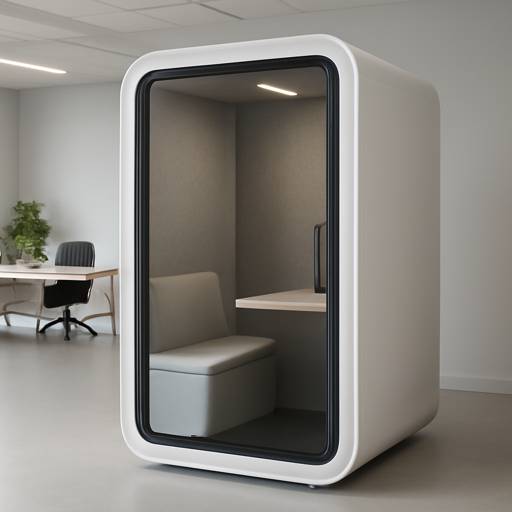
Power and connectivity convert acoustic shelter into a true workspace. Integrated outlets, USB-C PD, and network pass-through make it simple to dock a laptop and jump on a call. Cable management routes cords cleanly through grommets to avoid door pinch points while maintaining airtightness. Premium construction balances density with portability: modules ship flat, assemble in hours with minimal tools, and relocate as headcount or neighborhoods shift. Sustainable cores, low-VOC finishes, and long-life components minimize embodied carbon and simplify compliance. Fire-conscious design uses noncombustible or fire-retardant materials around electrical paths and lighting.
Ergonomics separates a quiet box from a productive room. Adjustable stools and leaning perches support short, energetic calls; integrated desks with appropriate knee clearance support longer stretches of typing. Glass proportions maintain sightlines for safety while preventing “goldfish bowl” exposure. Thoughtful proportions—ceiling height for posture, depth for camera placement, and width for wheelchair turning where applicable—help achieve inclusive access. Cepheus premium office pods emphasize tactile quality, modular scalability, and a refined finish palette that elevates the floor rather than adding visual clutter, aligning durability with the elevated expectations of modern workplaces.
Use Cases and Measurable Outcomes from Real Workplaces
When a fast-growing software team added six premium single-person pods to a 120-seat open floor, the impact was immediate. A simple time-sampling study recorded a 41% drop in task interruptions during coding sprints. Sprint retros showed code reviews completed 18% faster and ticket cycle times shortened as engineers reserved quiet slots for deep work. Managers shifted one-on-ones out of overbooked meeting rooms, and the pods reached 55% midday occupancy without queues when distributed across engineering, product, and customer success neighborhoods. After installation, employee comments cited reduced “headphone fatigue” and easier hybrid collaboration as top benefits.
A coworking operator tested four focus booths next to high-traffic lounges across three sites. Prior to the pilot, phone calls spilled into communal areas, generating frequent complaints. With pods available to book in 15-minute increments at a nominal fee, complaints fell 62% and lounges regained their social energy without the constant undercurrent of sales calls. Utilization stabilized at 68% during peak hours, driving a new revenue stream that paid for the pods in just seven months. Members praised the clear speech intelligibility for client presentations, thanks to low reverberation inside and strong isolation from café bustle.
In higher education, a library introduced four compact pods near study stacks to support group Zoom sessions and tele-advising. Students with sensory sensitivities appreciated the predictable, low-stimulus environment, and accessibility features—clear door openings, smooth thresholds, reach-friendly controls—broadened use. Staff tracked a 23% increase in successful virtual advising appointments, while overall noise complaints declined across adjacent study areas. Because pods concentrate lighting and climate needs, the campus facilities team saw an energy benefit: targeted comfort without overconditioning entire rooms for a single call.
Implementation details determine success. Place pods at the edge of collaboration zones to capture spontaneous calls before they ripple outward, but avoid adjacency to printers or break rooms that add mechanical noise. Provide visual line-of-sight to reduce friction in finding an empty unit, and add simple norms—short vs. long-use pods, “phone only” vs. “focus”—to distribute demand. If booking software is in play, keep increments short, offer grace periods, and show live availability on shared displays. For maintenance, choose finishes that resist fingerprints and clean with neutral agents to preserve acoustic linings. Cepheus premium office pods deliver reliable speech privacy out of the box, so teams can focus less on policing noise and more on getting work done—whether that means quiet concentration, a confidential HR chat, or a client demo that lands the deal.