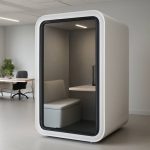
Why a Meeting Booth Has Become a Must-Have in the Modern Office
Open-plan offices promised collaboration, energy, and transparency. In practice, they often deliver something else: constant background noise, visual distractions, and a daily struggle to find a quiet moment for a focused conversation. A Meeting Booth offers a practical answer. It is a compact, enclosed, acoustically treated room designed for two to six people—or, in larger configurations, for conference-style sessions—so teams can talk, present, interview, and brainstorm without booking a full meeting room or retreating to a noisy corridor.
The appeal is simple: privacy on demand. Instead of reserving a traditional boardroom for a 15-minute check-in, employees can step into a nearby booth, close the door, and get straight to work. That reduces the friction that so often delays decisions. It also protects the rest of the office from disruptive conversations. When a sales team needs to rehearse a pitch, a product manager needs to conduct a user interview, or a hiring panel needs to compare notes, the booth becomes a neutral, professional space that is always ready.
For businesses, the value goes beyond convenience. A Meeting Booth can increase the usable capacity of an office without expanding its footprint. It can turn underused corners, wide corridors, or open zones into functional rooms. Because many models are modular, they can be installed in hours rather than weeks, and they can be relocated when the layout changes. That flexibility matters in fast-growing companies, coworking spaces, and hybrid workplaces where desk counts and team sizes shift from quarter to quarter.
Acoustics are the foundation of the experience. A well-designed booth uses layered wall structures, acoustic panels, sealed doors, and laminated or double-layer glass to keep conversations inside and distractions outside. This is not just about politeness. Confidentiality, concentration, and call quality all depend on controlling sound. When a booth gets acoustics right, people speak more naturally, listen more carefully, and finish meetings faster.
Comfort is equally important. A booth that feels cramped, dark, or poorly ventilated will not be used. Modern pods include integrated lighting, low-noise ventilation, power outlets, USB charging, and network connectivity. These details make the difference between a box that people avoid and a workspace they choose every day. In a hybrid world, where every meeting may include remote participants, reliable power and connectivity are not extras—they are essential.
What Makes a Meeting Booth Work for Calls, Collaboration, and Confidentiality
A Meeting Booth is more than a small room with a door. It is a system of design decisions that must work together. The first is acoustic separation. Sound travels through gaps, glass, ventilation, and structural joints. High-performing booths address each path with precision. Double-layer or laminated glass reduces speech leakage, while sealed doors and acoustic gaskets close the remaining gaps. PET acoustic panels and layered wall structures absorb reflections inside the booth, so voices sound clear rather than hollow or echoed. For Teams, Zoom, and Google Meet calls, this means fewer repeated sentences and a more professional impression.
The second is air and light. Enclosed spaces need constant, quiet ventilation. Low-noise fans and carefully routed airflow keep the booth fresh without creating a hum that microphones pick up. Integrated lighting should be even and adjustable, reducing eye strain during long interviews or workshops. If the booth is used for video calls, lighting should flatter faces without glare on screens. These details may seem minor, but they determine whether a booth supports an hour-long discussion or becomes uncomfortable after ten minutes.
The third is technology readiness. A modern meeting pod should make it easy to connect a laptop, start a video call, and share content. Power outlets, USB charging, and network connectivity should be positioned where people actually sit. Cables should be manageable, not tangled across the floor. Some teams also need display mounts, wireless presentation tools, or whiteboard surfaces. The best approach is to choose a booth that can be customized around the way the team works, rather than forcing the team to adapt to a generic box.
Fourth is size and layout. A two-person booth works well for one-on-ones, interviews, and quick alignments. A four-person booth supports small team stand-ups, client calls, and brainstorming. A six-person meeting pod can host project reviews, sprint planning, or remote workshops. Larger conference pods can replace or supplement traditional meeting rooms for recurring sessions. The right choice depends on the most common meeting types, not the maximum number of people who might squeeze in. Comfortable seating, a suitable table, and enough elbow room make people more willing to use the space.
Finally, modularity and customization matter. Offices change. Teams merge, shrink, or relocate. A booth that can be dismantled, moved, and reinstalled protects the investment. Customizable finishes, colors, materials, and branding allow the booth to blend into a corporate environment or stand out as a design feature. For coworking spaces, hotels, airports, healthcare settings, and educational campuses, this adaptability helps the booth serve many different users without losing its purpose. In every case, the goal is the same: a private, comfortable, well-equipped space that makes communication easier.
Real-World Scenarios Where a Meeting Booth Delivers Immediate Value
Consider a growing technology company in a busy city center. The office has an open floor plan with desks, couches, and a single large conference room. Employees constantly compete for the conference room, and many short meetings spill into phone calls at desks. After installing several two- and four-person Meeting Booths, the company notices a shift. One-on-ones move into booths. Recruiters conduct interviews without walking candidates past noisy desks. Developers take customer calls without booking a room. The large conference room is freed up for all-hands meetings and workshops that genuinely need the space.
In a coworking space, the challenge is different. Members from different companies share the same floor, and privacy is limited. A meeting booth gives freelancers, startup founders, and remote employees a professional backdrop for client presentations. It also creates a reliable place for confidential conversations. Because the booths can be branded and finished to match the interior, they add value to the membership experience rather than feeling like an afterthought. For coworking operators, this can justify premium pricing and improve retention.
Healthcare and education settings have their own needs. In a clinic, a booth can support private telehealth appointments, staff handovers, or sensitive family consultations without occupying a full examination room. On a university campus, a booth can serve as a quiet study room, a remote interview station, or a small group project space. In airports and hotels, travelers and guests can take a call, join a video meeting, or finish a presentation in a clean, acoustically controlled environment. These scenarios show that the meeting booth is not limited to corporate offices; it is a flexible solution for any environment where privacy and focus are scarce.
Case studies from around the world point to similar results. A financial services firm uses four-person booths for compliance reviews and client calls, reducing meeting room congestion by a significant margin. A design agency uses a six-person pod for creative critiques, keeping loud brainstorming away from focused designers. A remote-first company with a small hub office relies on single-person focus pods and two-person meeting booths to give visiting employees a place to work. In each case, the booth solves a specific bottleneck: too much noise, too little privacy, or too much wasted time searching for a room.
Local intent also matters. A business in a dense urban area may have limited square footage and high real estate costs. A booth maximizes every square meter. A company in a suburban campus may have more space but still struggles with long walks to meeting rooms. Placing booths near teams shortens transition time and keeps collaboration spontaneous. For global organizations, modular pods can be specified once and deployed across multiple regions, with local installation and support. That consistency helps distributed teams enjoy the same quality of private space, whether they are in a headquarters, a satellite office, or a flexible workspace.
In a professional services firm with client confidentiality requirements, even a short phone call can require a private room. When the firm added four-person booths near its project teams, consultants stopped using stairwells and empty offices for sensitive conversations. They could join a Teams call, review a contract, or debrief after a client meeting without leaving the floor. The result was not just quieter surroundings; it was faster access to privacy when it mattered most. That kind of everyday reliability is what turns a booth from a nice-to-have into essential infrastructure.