
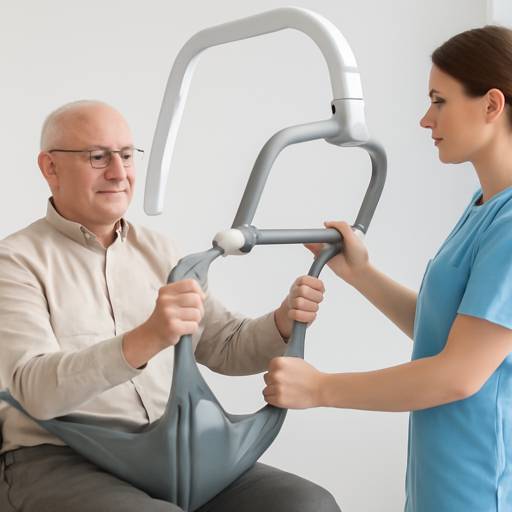
The landscape of patient mobility is evolving. For decades, manual transfers were the default, relying on the physical strength of caregivers and the cooperation of the patient. However, the hidden cost of that approach—chronic back injuries, patient anxiety, and inefficient workflows—has driven a significant shift toward mechanical assistance. At the heart of this transformation is the sit-to-stand lift, a specialized device designed for individuals who possess some lower body strength and weight-bearing capacity but lack the balance and stability to stand independently. Unlike a total body lift, which cradles a fully dependent patient, a sit-to-stand lift works with the patient’s own movement. The patient sits on a small sling or padded seat while their feet rest on a footplate. As the lift activates, it gently pulls the patient into a standing position, allowing them to pivot or step to a nearby chair, wheelchair, or bed. This process is not merely about moving a person; it is about maintaining their functional abilities. By engaging their leg muscles and core, patients experience less deconditioning and a greater sense of control. For facilities and home health providers looking to optimize both safety and dignity, finding a reliable sit to stand lift for sale is the first step toward a more sustainable care model. The market offers a range of configurations—from battery-powered mobile units for in-home use to heavy-duty models designed for bariatric applications in hospitals. The key is matching the device’s capacity and features to the specific needs of the patient population. These aren't just pieces of equipment; they are tools that preserve autonomy and prevent the cascade of complications that arise from immobility, such as pressure ulcers and muscle atrophy. The decision to invest in this technology is a decision to prioritize proactive rehabilitation over reactive injury management.
Decoding the Mechanics: How Sit-to-Stand Lifts Reduce Risk and Build Trust
To appreciate the value of a sit-to-stand lift, one must understand the biomechanical failure of manual lifting. The average caregiver is exposed to forces that often exceed recommended safety thresholds, particularly during repetitive tasks like standing a patient up from a chair. The moment a caregiver bends forward and tries to leverage a patient's weight off a surface, the compressive force on the lumbar spine skyrockets. The sit-to-stand lift eliminates this dangerous leverage. The device acts as a mechanical fulcrum, transferring the load through its chassis and into the floor. The caregiver’s role shifts from a lifter to a guide. They are no longer straining to overcome gravity; they are simply stabilizing the lift and ensuring the patient’s feet are correctly positioned. This single change has a profound impact on workplace safety metrics. Facilities that adopt these lifts report a significant reduction in worker compensation claims related to back and shoulder injuries. But the benefit extends beyond the caregiver. For the patient, the experience is radically different. A manual transfer often involves a sudden, unstable pull. The patient may feel scared, rushed, or out of control, leading to resistance and increased risk of falls. With a sit-to-stand lift, the motion is smooth, controlled, and patient-led. The lift can be paused at any point, allowing the patient to rest or regain their breath. This builds trust and cooperation, which is critical for patients with dementia, postoperative anxiety, or a history of falls. Furthermore, the device provides a predictable safe zone; the broad base and locking casters offer stability that a human stance cannot match. When searching for a sit to stand lift for sale, look for models with intuitive hand controls, adjustable knee pads to prevent forward sliding, and a range of seat widths to accommodate different body types. The most effective units also feature emergency lowering mechanisms and clear visual indicators for battery life and weight capacity. This mechanical precision turns a high-risk, high-stress moment into a routine, dignified procedure.
Clinical and Operational Advantages: Beyond the Basic Transfer
The strategic deployment of a sit-to-stand lift yields benefits that ripple through an entire care ecosystem. From a clinical standpoint, the device is a powerful tool for early mobilization. In acute care settings, getting a patient out of bed within 24 hours of surgery or a medical event is a key performance indicator for preventing pneumonia, deep vein thrombosis, and delirium. A sit-to-stand lift makes this goal achievable even with patients who are weak or in pain. It allows physical therapists and nurses to begin gait training sooner, using the lift as a safety net while the patient practices weight shifting and stepping. This early intervention shortens hospital stays and reduces readmission rates. On the operational side, the lift streamlines the workflow of an entire shift. Consider a typical morning in a long-term care facility: a single caregiver might need to transfer eight to twelve residents from bed to wheelchair for breakfast. Without mechanical assistance, this is a grueling, high-risk marathon. With a sit-to-stand lift, the transfer time is significantly reduced, and the physical toll on the caregiver is negligible. This efficiency can allow a facility to operate with a leaner staff or allow existing staff to dedicate more time to direct care, medication management, and emotional support rather than brute-force lifting. A common concern is the initial capital expenditure. However, a comprehensive cost-benefit analysis reveals a rapid return on investment. One major hospital system documented a 60% reduction in caregiver lifting injuries within one year of introducing a fleet of sit-to-stand lifts. The cost of those prevented injuries—in medical bills, lost wages, and temporary staffing—far outweighed the purchase price of the lifts. Additionally, patient satisfaction scores often rise because residents feel safer and more respected. When evaluating options for a sit to stand lift for sale, consider the total cost of ownership, including battery replacement cycles, sling cleaning protocols, and the availability of local service technicians. Facilities that invest in robust models with washable sling systems and durable upholstery find that the equipment pays for itself within months through reduced injury costs and improved staff retention.
Real-World Implementation: Case Studies in Acute Care and Long-Term Facilities
Theory is useful, but practical evidence solidifies the case. A 200-bed skilled nursing facility in the Midwest provides a compelling example. Prior to adopting a standardized sit-to-stand protocol, the facility reported an average of 22 caregiver musculoskeletal injuries per year, many requiring surgical intervention. The director of nursing implemented a "no manual lift" policy for any patient who could bear weight on at least one leg. They purchased a fleet of ten new units. Within the first year, reportable injuries dropped to three. Staff morale improved, and the facility gained a reputation as a safer place to work, which drastically improved recruitment. The staff reported that the fear of being injured had been a primary reason for earlier turnover. The lifts were stationed in high-use zones like the dining room and rehabilitation gym. A second case involves a home health agency servicing a rural population. They faced a unique challenge: caregivers often worked alone in homes with limited space. A standard floor lift was too bulky. They selected a compact, lightweight sit-to-stand model that could be disassembled and stored in a car trunk. The anchor text sit to stand lift for sale became a frequently searched query for their client families, who were desperate for a solution to safely transfer a parent from a living room chair to a commode without risking a fall. The agency trained caregivers on how to use the lift in conjunction with a gait belt for enhanced control. The result was a dramatic drop in home falls and a significant reduction in the need for expensive emergency room visits. A third example is a large urban hospital that integrated sit-to-stand lifts into their post-operative total knee replacement pathway. Previously, patients required two staff members for the first few transfers. Now, a single nurse can safely assist the patient to stand using the lift, which doubles as a stable support during the initial ambulation attempt. This streamlined process cut the average physical therapy session time by ten minutes, allowing the department to see more patients. These cases underscore a universal truth: the sit-to-stand lift is not a one-size-fits-all product, but a versatile platform that adapts to the needs of the facility. Whether in a tight home bathroom or a busy hospital corridor, the device provides a reliable, reproducible method for achieving a standing transfer. The common thread in every successful implementation is the commitment to proper training and the selection of equipment that matches the specific patient acuity and environmental constraints of the setting. Facilities that conduct a thorough needs assessment before purchasing almost always achieve a higher utilization rate and a faster return on their investment.